The risk you already know about.
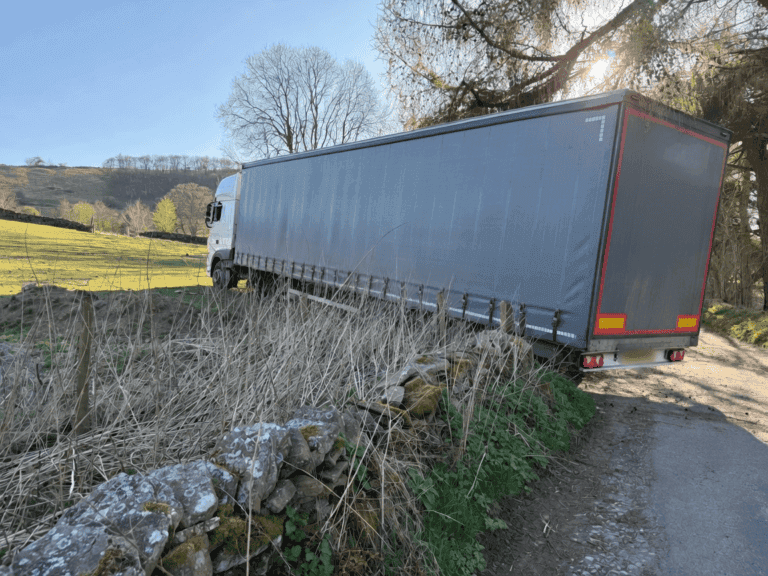
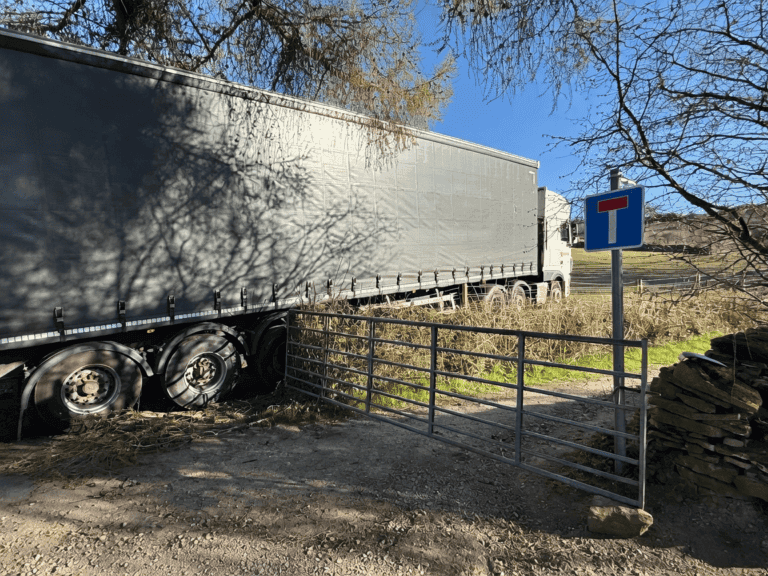
Last week, a water main collapsed on a road near me. I live rurally, and this particular lane happens to be the only way in for articulated lorries serving a couple of local businesses – a single point of failure if ever there was one.. What followed was entirely predictable and completely chaotic in equal measure: forty-foot trucks trying to reverse out of passing places built for tractors, drivers on the phone to their transport managers, and a queue of very patient – and some not so patient – locals stuck behind them. It will happen again. It always does, eventually.
A familiar story, just bigger
I mention it because a client of mine has just been dealing with almost exactly the same thing, on a rather larger scale. They operate from several sites around the UK, but one of them does something none of the others can, so for continuity purposes it’s effectively their only site for that particular function. There are three roads in and out. Only one of them will take an HGV. A burst water main closed that road for a fortnight. It will close again shortly when the utility company comes back to do the proper repair rather than the temporary patch they’ve put down in the meantime. To their credit, they haven’t needed me – their plans held up, and previous exercising paid off.
A Single Point of Failure, hiding in plain Sight
Neither of these is a novel risk. Nobody’s business continuity plan needs a section on unprecedented, once-in-a-generation events to cover a lorry route with a single point of failure. This is about as known as known risks get: the sort of thing that gets a nod of recognition in a workshop and then gets quietly filed away as somebody else’s problem – the water company’s, the council’s, National Highways’ – right up until the day it becomes very much yours.
Why We Prepare for the Wrong Thing
That’s the pattern I want to flag, because I see it constantly in my work: organisations are often far better prepared for the risk they’ve never seen than the one they see every year. The novel threat gets a tabletop exercise, board attention, and a line in the annual report. The recurring, boring, thoroughly-documented one gets nothing, because everybody assumes someone else owns it, or that it probably won’t happen this year, or – my personal favourite – that raising it again just makes you the person who’s always going on about the roads.
There are reasons known knowns get this treatment, and none of them are stupid, which is exactly why the pattern is so hard to break. Access routes and utility infrastructure sit outside the fence, so they don’t belong neatly to IT, or facilities, or procurement, and a risk with no obvious owner tends not to get picked up by anyone. These events also don’t arrive on a schedule. Burst water mains and long-planned road closures don’t announce themselves a year in advance, so the risk always looks fine to leave for next quarter, right up until it isn’t.
And the fix – whether that’s a genuinely tested alternative route, a standing relationship with the highways team, or simply agreeing with a haulier to switch from one articulated delivery to several smaller ones because no alternative route actually exists (my own village has more low Victorian railway bridges than roads that will take a lorry) – costs money and looks disproportionate, until you’re the one standing in a passing place at 8am watching an artic attempt a three-point turn on a lane built for a tractor.
Test the workaround, not the risk register
If I had one piece of advice for the people reading this who sit on the procurement or governance side of BC planning, it wouldn’t be “update your risk register.” That’s almost certainly already been done, more than once, and this exact risk is very likely sitting on it already, patiently, in amber. My advice would be narrower and less comfortable: test the workaround, not just the threat. Nearly everyone can write down “alternative route available.” Far fewer people have actually driven that alternative route in a 44-tonne vehicle, checked its bridge weight limits, or rung the local authority to find out what “resurfacing works, six weeks” genuinely means for access on the ground.
My client, to their credit, were already in discussions with the council about keeping the road open in the first place – proof that the relationship matters as much as the paperwork. It’s also worth having an actual relationship with the people who control the roads – the highways team, the utility’s incident line, the county emergency planning officer – built before you need it, rather than assembled at speed on the morning the water starts coming up through the tarmac.
None of this is glamorous. It will never win an award for innovative risk management, and it won’t feature in anyone’s five-year strategy slide. But the water main near me and the access road at my client’s site share exactly the same lesson: the disruptions that actually catch organisations out are rarely the ones nobody saw coming. Far more often, they’re the ones everybody saw coming, for years, that nobody quite got round to testing.